
Inflation and rising prices have led to major unrest in Sierra Leone. What does this mean for businesses globally, and what should you do about it?
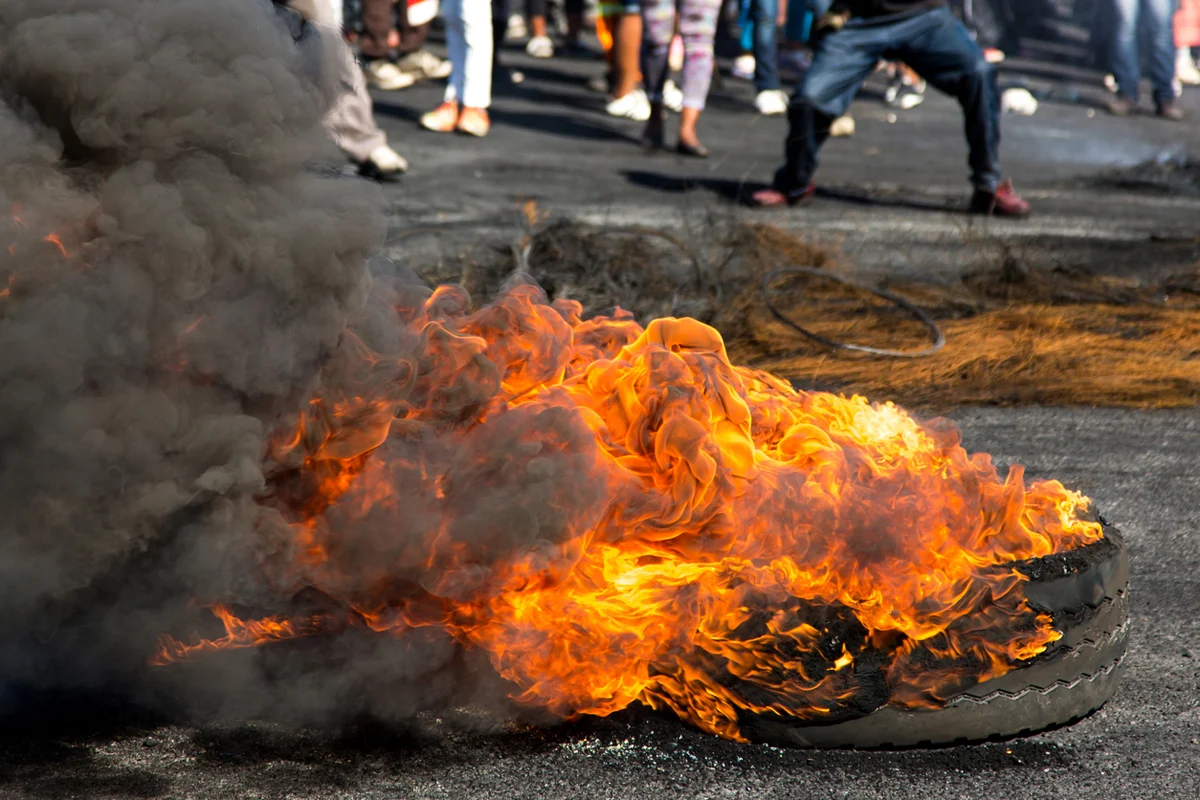
Yesterday (11/08/22) saw an outbreak of major riots across Sierra Leone, with six police officers and 21 civilians confirmed dead following a development of less violent protests on Wednesday. This type of unrest is highly unusual for Sierra Leone, especially in Freetown where a number of police stations were burnt down, but has been brought on by a perceived lack of government action to combat rising cost of living due to inflation and supply chain issues. A recent BBC Africa editorial highlighted prices of key staples such as rice, cassava and groundnut oil, most of which is imported, increasing by two or three times over the past year. In response, President Julius Maada Bio has deployed the army to the streets and imposed strict controls on internet services and social media to contain the violence.
This should not be taken as an isolated incident. The same issues are present across Africa and the world, particularly rising energy, food and fuel costs. It is unlikely that most governments will be able to contain the impacts for the poorest and most vulnerable at a macro-economic level.
Rising inflation has long been linked to unconventional forms of political engagement, such as confrontational activism, due to its direct links with decreasing socio-economic wellbeing. As people are unable to sustain their livelihoods, governments become the focus of anger and unrest. History shows that rising commodity prices are key contributors to large scale unrest and regime change. The Arab spring, the 1974 Ethiopian Civil War and the Sudanese revolution in 2019 all resulted from street protests and civil disobedience linked to rising prices and inequality.
Organisations should not be complacent. The potential for violent outbreaks of unrest must be seen as a viable possibility across most of the world, and the impacts of these for businesses can be extreme.
Scenarios can be severe, including any combination of destruction and unavailability of key assets, looting, loss of infrastructure and communications, supply chain issues, labour action and even deaths of staff and loss of license to operate. In the worst cases these can be devastating for businesses, particularly small businesses which are typically underinsured and lack the liquidity to survive significant losses and revenue shocks. Even for larger firms, mismanagement of crisis events can have significant impacts to investor and consumer confidence into the long term. However, these can be mitigated with the correct preparation and effective response.
The role of your private security function within the management of unrest should be carefully considered. Responses must focus on proactive actions, as in the event of an incident capacity and capability to effectively manage the event will be handicapped by overstretched emergency response services. Nonetheless, having crisis management and business contingency and continuity capacity in place is essential. Mitigation of these risks should be considered in two parts: planning and proactive threat-level based measures.
Planning
- Revaluation of your security planning should always begin with a review of security risks analysis, including threat and vulnerability assessments. This allows management to develop a clear understanding of the risk portfolio, and how the new and updated threats and risks relate to assets and activities – and therefore your organisation’s potential for loss. Without this, risk is abstract and decision making can only happen based on individual hunches.
- Once you have detailed understanding of the risks, you can begin to review plans for crisis management, contingency and business continuity. These are essential for the effective and efficient response, management and recovery of a crisis event, and therefore should be well promulgated, discussed and rehearsed to ensure individuals understand their roles and responsibilities. Engage with the police and emergency services and carry out joint rehearsals if possible. Clearly define available resources and identify routes to secure further resources necessary to deliver an effective response.
- Build reactive effectiveness by considering all scenarios. For example the security of your assembly points may be compromised if your site is located near government buildings, and contingency plans may be redundant if key contractors are unavailable.
Proactive threat-level based measures
- Consider means to improve your understanding of events in the short term. Monitor local media and state communications to build and up to date picture of realities on the ground. Make this the responsibility of an individual or team, and ensure briefings are well promulgated and understood.
- Make operational changes to reduce exposure to adverse events. Journey management should be a key consideration here, do all your management, staff and contractors need to be on site during times of elevated risk, and what routes should they take to reduce likelihood of being affected if they do need to be in transit? Is it worth temporarily securing key assets and providing increased security capacity to reduce the probability of operationally critical capabilities being unavailable and hindering business continuity?
Find out more
To find out more about Henderson and how we can help support you please get in touch.
Telephone us on: +44 (0)207 730 5446, or email us at: london@hendersonrisk.com
